Articles for tag: Cross, Fr. Athanasios Mitilinaios

GIVING WITNESS TO THE TRUE CHURCH

Orthodox Christians all over the world have received the unchanging Christian Faith, passed down from the Holy Apostles to their successors, and continue to practice it today in the One Holy Catholic and Apostolic Church – The Orthodox Church.
%%tb-image-alt-text%%
Homily on the Cross

THE CROSS OF CHRIST, OUR ETERNAL GLORY
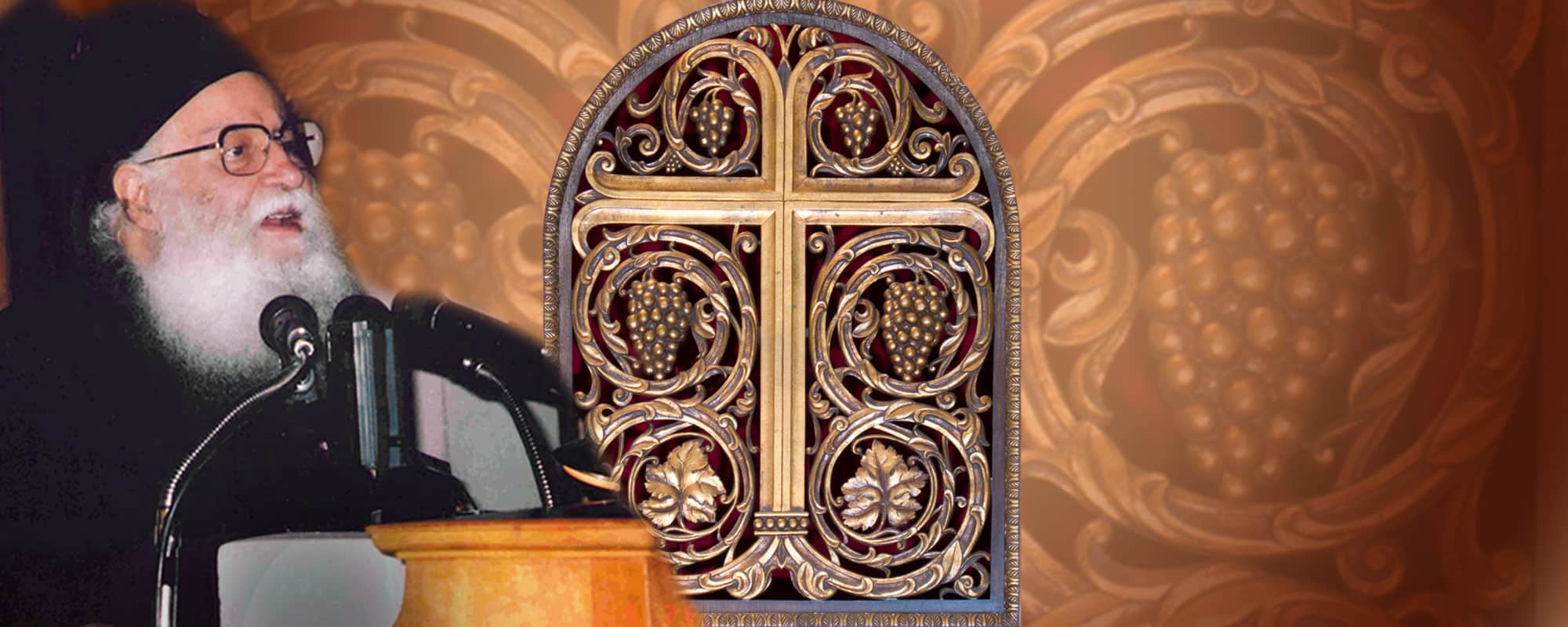
Fr. Athanasios Mitilinaios of blessed memory (+2006) delivered the following homily at the Holy Monastery of Komninios Stomiou in Larissa, Greece, on September 10, 2000, on the Sunday before the Elevation of the Precious Cross and interprets Galatians 6:11-18. The homily was delivered in a free manner and recorded live. Most of the scriptural quotations are not direct quotations. The following translation was made from a transcription by Ms. Eleni Linardaki and Mr. Athanasios K. | Father Athanasios was the abbot of the Monastery of Komnenion in Larissa, Greece.

Homily of Blessed Elder Athanasios Mitilinaios

“THE CROSS OF CHRIST, OUR ETERNAL GLORY”

fr athanasios mitilinaios
Blessed Fr. Athanasios Mitilinaios

On September 14, my beloved, our Church celebrates the Universal elevation of the Precious Cross. On this day we remember the finding of the Precious Cross by Emperor Saint Constantine’s mother, Saint Helen, and its elevation high up from the pulpit by the then Patriarch of Jerusalem, Makarios, around 325.

In order to glorify and honor the Cross, our Church thought to make the feast of the Precious Cross an echo of Great Lent and Good Friday. She even placed the Feast of the Transfiguration 40 days before the Exaltation – 40 days – and it creates an echo of Great Lent.

In the New Testament it is written that the Transfiguration took place shortly before the Passion, that is, a few days before the 15th of the month of Nissan (about the middle of February or March). Moreover, the Church also appointed the two Sundays, the one preceding and the one following the feast, to contain hymnology and biblical readings related to the Precious Cross. Thus, these two Sundays stand as pillars of honor and they accompany the Great Feast.

If you ask, “Why all of this?” The answer is, all the theology of God’s love for man culminates in the sacrifice of Christ on the Cross. We hear from the Evangelist John:

“God so loved the world that He gave His only-begotten Son, that whoever believes in Him will not perish but will have eternal life.” (John 3:16) (Here “so” [οὕτω] in “God so loved the world”, means “immeasurably”)

Moreover, the Cross of Christ is the center of the Gospel. The Holy Cross is also at the center of spiritual life – the center, I emphasize and repeat – of the spiritual life. If you do not place the Precious Cross at the center of your life, then it is impossible both to understand, and much more, to experience spiritual life.

The things we consider spiritual life, allow me to say, are mud. They do not really constitute the spiritual life. Because, simply, many times the entire meaning of the Cross is missing.

If the Cross or the preaching of the Cross is taken away, then we have no salvation. This is why the Apostle Paul in his first letter to the Corinthians writes:

“The word of the Cross is foolishness to those who are perishing.” (1 Cor 1:18) (“word” here means preaching)

Those who ultimately remain unrepentant will, of course, be lost; they will not be saved. For them, the Precious Cross is foolishness. They say: “How is it possible for an incarnate God to be crucified?” And, of course, for the Jews, he says, it was a scandal (1 Cor 1:23): “For if He is Yahweh (the LORD, that is), The Lord of Glory, The Holy One of Israel (as the prophet Isaiah saw Him sitting on an elevated throne, Is. 6:1) how is it possible for Him to ever end up on the Cross? He is not a curse.” (Deut 21:23) This is a scandal to the Jews, which prevents them from returning to Christ.

“…but to us who are being saved it is the power of God.” (1 Cor 1:18)

Αnd certainly it is an expression of the love of God, the Father and the Son and the Holy Spirit, of the Holy Triune God, that is.

Through the Cross, my beloved, we re-enter Paradise that we had lost; it is the symbol of the world’s denial, because the world crucified Christ. Therefore, if we welcome the Cross, we essentially live in rejection of the world.

The Precious Cross is also the symbol of asceticism. Does not the Apostle say to the Philippians that for some Christians, their God is their belly (Phil. 3:19)? He is saying, “their God is, ‘what will we eat, what we will drink’ and what will we wear’” (Mt 6:31), and he calls them enemies of the Cross of Christ (Phil. 3:18). Why? Simply because they have rejected asceticism and, consequently, the Holy Cross.

Moreover, the Precious Cross of Christ is the Tree of Life. Notice, it says in Scripture, “God planted two trees in Paradise, the one tree was the knowledge of good and evil and the other tree was of life.” (Gen. 2:9) (Paradise, I remind you, was upon the Earth. The word “Paradise” is Persian and means “big garden” and it was between two rivers, the Euphrates and the Tigris.)

And He said to the first-formed man: “You are not to try the fruit from the tree of knowledge” (Gen 2:17). Those who were tricked by the devil tried it, despite God’s warning, “the day you eat it, you will die” (Gen 2:17, 3:3). And God expelled them from Paradise. Paradise was a particular place; the rest of our planet was called Earth. This place was called Paradise. It was a symbol of the Kingdom of God. (Today we can go there, it is today’s Iraq, if you will.) Paradise was a symbol. The one tree which deceived them, from which they ate fruit, led them to death.

The love of God expelled them so that they would not go near the tree of life, for then, evil would become, as the Holy Fathers say, immortal. Thus, He reserved the fruit of the Tree of Life for later.

And what is the Tree of Life? It is Jesus Christ, my beloved. Or, if you will, it is the Cross. And just as fruit hung on the tree of life in Paradise, here Christ hangs on the Cross. Therefore, if we do not eat the fruit of the Tree of Life and do not have this as a rule, we sin. It is the opposite of what it was then. So then, what is the fruit? The Body and Blood of Christ, and with It we have life, eternal life.

You see, therefore, how all of these things prefigured, how they prepared man beforehand, for the coming of the Son of God, His Incarnation into this world. Now, therefore, in order to live, we must eat the Fruit of the Tree of Life (the Precious Cross), His Body and His Blood.

Having a knowledge about the Holy Cross, what we have said thus far, reveals to us the magnitude of the love of God and it is the key to our re-entry into the Kingdom of God.

This is how we turn back to the Kingdom of God. But the Kingdom of God is far better and far happier than the ancient Paradise. In other words, it is the kingdom of immortality and incorruption.

The Apostle Paul said the following to the Galatians: “Far be it for me to boast in anything except the Cross of our Lord Jesus Christ, by which the world has been crucified to me, and I to the world” (Gal. 6:14). Here “the world” means the worldly thinking, that which strikes at the Philippians, whom I told you previously, “their god is their belly” (Phil. 3:19). The mind of the flesh, to think in worldly ways, this has died for me, Paul. I too have died for the world.

This is very important indeed. It shows us the way, how to live the exact same way. So, the boast of Paul, and indeed Paul’s only boast, is the Cross of Christ – the crucified Christ! For we are often embarassed to say that we worship a crucified God.

Saint Cyril of Jerusalem, in his Catechisms, refers to the Holy Cross, specifically in his 13th Catechism. We will read a small selection of quotations on what he says about the Precious Cross. Pay attention. He writes:

“The boast of the catholic Church, the boast of boasts of all the works Jesus is the Cross; the Church regards every work of Jesus as boastworthy, but the boast of boasts is the Cross.”

St. Cyril explains further:

“And do not marvel if the whole universe was redeemed; for it was not a bared man, but the only-begotten Son of God who died on its behalf.”

To put it simply, He who was crucified was not a mere man, a mere naked man. But what was He? The Son of God, who incarnated, the only-begotten, who died for us all.”

St. Cyril also writes:

“Let us not then be ashamed of the Cross of our Savior, but rather glory in it.”

Look how things have changed. Look how the devil has succeeded in making us make our Cross secretly, so that others will not see us and say that we are Christians. Are you not Baptized? Are you not a Christian? Why do you hide this, your status?

And as I have related to you many times, when they pass by somewhere, a church for example, they make their cross under their jacket. My beloved, if someone invites you to dinner where some believe and others do not, you make your cross and then begin to eat. Do you go out to eat? Do you make the sign of the Cross at restaurants? But why not? Because we accept the benefaction, the food, but refuse to make a confession of faith? Is this not inconsistent? What will we do? We will make our cross. And we will also say a prayer, “The Lord’s prayer”, for example, if we go out for lunch.

This is what Saint Cyril says, that we should not be ashamed of the Precious Cross, but we must, through the Precious Cross, confess our faith in Christ. He continues:

“I confess the Cross because I know of the Resurrection; for if He endured crucifixion and had remained as He was, perhaps I would not have confessed it; I might have concealed both it and my Teacher; but now that the Resurrection has followed the Cross, I am not ashamed to declare it, because the Teacher died upon the Cross.”

And since we know He was crucified between two robbers, He might even have been viewed as an arch-robber. Saint Cyril continues:

“Whoever does not believe in the power of the crucifixion, ask the demons.”

This is a very good argument, even if indirect. We should not dwell on this, but in this case, by concession, we can.

“Whoever does not believe the words, believe what he sees.” (Jn 10:38)

Like what? Like what happens with fortune-tellers. When the Demons flee.

It happens all the time. A woman or a man goes to the medium, to the fortune teller’s little table. And there (it’s frightening what happens), let’s say it’s a woman who is a medium (medium means “intermediary”). She says to you right away, “My good lady, take off the cross that you have around your neck.” Why? Because the demons informed her that they would not reveal anything to her unless her client takes off the cross.

Is this not proof? The demons are frightened, they tremble and hit the road before the Cross of Christ. All of this shows that when we go to the Precious Cross, we strike the demons with a bolt of lightning.

It happens at times with the demon-possessed also, as it happened with that demon-possessed man in the Gospel: “What have You to do with us, Jesus, Son of God!” (Mark 1:24)

Do you see how the demons are frightened? Not just then, in the Gospel passage where it is recorded, but also today as I explained to you. Just go to the witch. She’ll tell you to take off your cross or whatever else.

St. Cyril continues:

“Many have been crucified throughout the world,” (it was the Roman mode of executing convicts) “but when they see even the Sign of the Cross of Christ, who was crucified for us, they shudder.”

He is saying, there were other ways the Romans executed prisoners, but none of the demons were frightened by any of them. But just seeing the sign of Christ crucified, the demons flee. They hit the road and flee, only by seeing the Cross, not just Christ.

He continues:

“For those men died for their own sins, but Christ for the sins of others.”

The death on the Cross is not ostensible. This is why the Apostle Paul says, “He died under Pontius Pilate”, truly. And look what he says: “according to the Scriptures.” (1 Tim 13:6, 1 Cor 15:3-4) We took this and have it in the Creed.

In other words, he is saying, The Cross was not a myth, an imagination, and afterwards, neither was the deliverance, for then salvation would also be an imagination. The death was not a myth. Christ truly died on the Cross. Therefore the Passion is true. Christ truly suffered on the Cross. And because the Resurrection is true, for He was also truly crucified, we are not ashamed. He was crucified, and we will not deny it, but will boast about it, and If I reject it now, will I not be reproached by Golgotha which is near me?” (St. Cyril of Jerusalem was bishop of Jerusalem when he wrote this in around 350 A.D. He is saying, “Look there, Golgotha is right next to us!”)

It is an awesome tradition that Jesus died on the Cross. “I am reproached by the wood of the Cross”, the one found by Saint Helen only 25 years prior to St. Cyril’s writing.

“The wood of the Cross reproaches me”, he says, every little piece all over the world. (It was cut into very very small pieces and distributed. Today the largest fragment of the Precious Cross is found on Mount Athos.)

He says,

“Do you wish to know clearly that the Cross is the glory of Jesus? Hear the Lord say it Himself: “The time has come for the Son of Man to be glorified.” (Jn 12:23) He said this to His disciples shortly before He was crucified. Do you see the glory of the Cross? He knows that His glory is the Cross. If, therefore, He considers it a glory that He has done the will of the Father, and by His Cross He saves the world, why should I be ashamed?”

Beloved, the Apostle Paul writes: “It is Christ with whom I am crucified.” (Gal 2:20) And if the glory of Jesus is the Cross, then whoever is crucified with Jesus is glorified also. All the Saints took up their Cross and were glorified. Our glory, therefore, is the Cross of Christ.

These days, as I told you, there are many who, unfortunately, reject the Cross because they reject Christ.

Thus our confession and our boasting about the Cross of Christ began for us many years back, to the era of Paul and the proto-martyrs. The sign of the Cross, made properly, is an expression of this glory and is our boast.

One time a man came here and received communion making a caricature of the sign of Cross.1 Beloved, we will make our cross correctly. Correctly. Did you hear? Correctly. It became a caricature. It has become like this everywhere, hiding that we make our Cross.

So then, we will make the sign of the Cross at any place and time, before the eyes of believers and unbelievers.

Let us then close with the Apostolic reading from Saint Paul:

“But God forbid that I should glory in anything but the Cross of our Lord Jesus Christ, by whom the world is crucified to me, and I to the world.” (Gal 6:14)

Amen.

GLORY BE TO THE HOLY AND TRIUNE GOD

  1. Perhaps Fr. Athanasios means what is known to some as “the bouzouki cross”, a cross made three times with a very rapid circular motion over the breast, where a bouzouki player might strike his instrument with a pick.

Translated, edited, adapted, and added emphases by Anthony Hatzidakis

Sources:

Photo of author

GIVING WITNESS TO THE TRUE CHURCH

Orthodox Christians all over the world have received the unchanging Christian Faith, passed down from the Holy Apostles to their successors, and continue to practice it today in the One Holy Catholic and Apostolic Church – The Orthodox Church.
%%tb-image-alt-text%%

THE PARABLE OF THE WICKED FARMERS

Fr. Athanasios Mitilinaios of blessed memory (+2006) delivered this homily “The Parable of the Wicked Farmers” on August 24, 1980. The homily was delivered in a free manner and recorded live. Most of the scriptural quotations are not direct quotations. The following translation was made from the live recording. Fr. Athanasios was the abbot of the Monastery of Komnenion in Larissa, Greece.

Homily on the Parable of the Wicked Farmers – Fr. Athanasios Mitilinaios
13th Sunday of Matthew | HOMILY 70


A householder planted a vineyard, put up a fence around it,
dug a wine press, built a tower, let it out to farmers and went abroad. (Mt. 21:33; cf. Lk 20:9, Mk. 12:1)

fr athanasios mitilinaios
Blessed Fr. Athanasios Mitilinaios

We see here, my beloved, time which God uses for the salvation of a people, but also for the salvation of a soul. God is the householder who plants the vineyard. That is to say, He plants His people on the earth, but He also plants every human soul, every human who exists and lives; and since He will take care in every way to provide all that is necessary for a good cultivation, He asks for fruit. But let us take a closer look at the parable to unfold its meaning.

A certain man planted a vineyard and let it out to the farmers having previously dug a winepress inside, provided all that is necessary in order to make wine from the grapes, but also for the cultivation of the vines, and went so far as to put a fence around it. He gave this vineyard to the farmers all prepared and left. The time came to harvest the fruit, so he sends some of his servants to get fruit from the farmers. But instead of giving the fruit, they beat some of the servants, stoned others and killed others. He sends servants for a second time and, again, they treated these in a similar manner, so he says, I will send my son; they will be ashamed [ντραπούν], he is my child. When they saw the son approaching, those wicked farmers said, This is the heir; let’s kill him, and they seized him, cast him outside of the vineyard and there they killed him. And the Lord says, Tell me, when this householder returns, what will he do to those farmers? His listeners answered, He will destroy those wicked farmers in a most miserable manner.

This parable, my beloved, is a truly frightening parable, but it has power both for peoples and for human existence. God warns about a spiritual fruit-bearing. Do not forget how He warned Noah and through Noah, Noah’s generation, that He would bring a flood if they did not repent. (Gen 6:13-14) The ark was under construction for one­-hundred years, not only because it was difficult to construct such an enormous project in those days, but, mainly, to give time for the people to repent.

Remember also how He warned the Ninevites, through the Prophet Jonah, that Nineveh would be destroyed. After many years Nineveh was overthrown, because they repented only temporarily and not with depth and with fruit of repentance. This is the way God gives a warning, that unless the people repent, He will bring destruction.

The vine is the people of God, a people above all other peoples which God Himself planted. First, it was the people of Israel; today it is His Church. He says this in the Prophetical writings, through the Prophets Isaiah and Jeremiah: I planted you a fruit-bearing vine, true in every way. (Jer. 2:21) I myself, He says to Israel, planted you a true vine, genuine and fruit-bearing, with everything necessary to bear fruit. And He continues through the Prophet Isaiah, And he put up a fence around it and removed the stones, made a wine press, planted a choice vine, built a tower in the midst of it and also hewed a wine-press in it. (Is. 5:2)

All of this indicates genuine care for the people of God. Observe, the people of God cannot be anything but choice and are obliged to be choice. Later, when it will be proven that this vine is unable to produce fruit, God will take exception, and says through the prophet Isaiah: I expected for it to produce grapes, I waited for it to produce grapes, but it produced thorns. (Is 5:4) I expected for it to produce judgment, but it brought forth iniquity and not righteousness, but a cry. (Is 5:7) I waited for it to bear fruit, fruit of virtue, but it brought forth instead the fruit of iniquity and of outcry and of contention and of unbelief and of apostasy.

My beloved, it makes an impression, how the people of God end up becoming a fruitless vine. Christ is coming, and because His Father planted this vine, He says, I took you out of Egypt and planted you as a choice vine here in the promised land and your branches spread out; and now I ask for fruit. (Jer 2:21)

The Psalmist says, O Lord, do not destroy this vine, that which Your right hand planted. (Ps. 79:15) Lord, he says, wild boars have entered your vineyard and destroyed it (that is, the surrounding peoples). Please, says the devout Psalmist, do not destroy this vine, but rather, bless that which was planted by Your right hand. (Ps. 79(80) 13-14) (This is also what the bishop says when he blesses the people. It is this very verse from the psalm.) However, this vine, as God says here, proved to be ingenuine.

God sent prophets again and again. He also sent His Son: They will be ashamed before My son. (Mt 21:37) This is very telling as it indicates that there is only one stronghold left that can protect the soul. Shame. When shame has left, nothing remains in the human soul. Pay attention, please. We men do everything we can to tear down shame!

Yesterday a a 20 year-old young man, when told by someone older than him to be careful in some things, said, “Why? Everything is permitted for me, I can do everything.” I said to him, “Yes, you know what the Apostle Paul says: Everything is lawful for me, but not all things are expedient. (1 Cor. 10:23) Yes, all things are permitted to you, but not everything is beneficial for you and you permit everything because you are free. You are like the farmers; it is within your power to assault those whom God sends seeking fruit from you. Moreover, you can even kill God within your soul and say, “God does not exist.” Certainly, He permits you to. Is this beneficial for you? This is not beneficial for you.

And how does one arrive at this end? When shame has been discarded. Because when you say “I can do everything” it means that shame has left. Do you know how great a thing shame is, my beloved? It is a guardrail. Today you see these things I have mentioned to you in every behavior. We are trying to tear down the virtue of shame, with the result that we accept all the evils.

For example, when our child has natural shame, whether our boy or girl, we consider it an inhibiting element for what we call a “normal” social life and we try to remove the shame from our children, supposedly for them not have a complex, so that they can go on with their life and succeed and dominate. This is a goal. So it is, those who are wicked and those who do evil have removed shame before God, because what did the Father say? He said, I will send the Son, the Logos of God, they will be ashamed. They were not ashamed and they murdered Him outside the vineyard. Why does He say “outside” the vineyard and not inside the vineyard, since it is known that Christ was crucified in Jerusalem? This shows that they wanted to make the vineyard their own; and by murdering the Son outside the vineyard, they wanted to completely alienate him from the inheritance.

Thus, a people ends up being an ungodly people. It ends up killing its God. Christ, however, seeing that this people did not bear fruit as was proper, on the night He was about to be handed over, says to His disciples, “I am the true­ vine and My Father is the vine dresser.” (John 15:1) What does this mean? The vine, the one which God planted, Israel, is condemned for it did not prove to be a true vine, as God says, I planted a true vineyard, but the work of God is not in vain; as a result, I myself have come to be the true vine.

At first, the true vine was a people, now it is a person. So then, we have a new vine, says the Lord: I am the true vine. Whoever will stay as a vine branch united to Me, this one will bear much fruit. Stay united with Me in order to bear fruit. Stay united with me in order to produce fruit, for every branch that is not united with Me, My Father cuts off and throws out; and it dries up, withers and is put into the furnace in order to burn in the flames of hell. (John 15:1-6)

Βut He poses another question, my beloved. Is this new vine which was planted on the earth, which is Jesus Christ, condemned like the old vine? Away with the thought! Away with the thought! Because it is Jesus Christ Himself; He remains a true vine. But now, however, we have something else. The branches, we the believers, are cut off! This, truly, is the great crime which we commit against ourselves. The result? Whatever God said for Israel of old, now applies for us Christians when we are cut off from the true vine, Jesus Christ. What does He say? Hear what He says, And I will break down its fence and it will be for plunder. I will break down its wall and it will be trampled on; and I will despise my vineyard and it shall never be pruned or tilled; and I will leave it barren land for thorns. I will remove the wall and it will be trampled on and it will be plundered by enemies. (Is. 5:5-6)

This is what a people who are cut off from the true vine, Jesus Christ, end up as, beloved ones. A barren place. But also one soul, one person, one heart that is cut off from Jesus Christ can turn into a barren vine. How does this happen? From being trampled on. Why does He say “trampled”? Just as in the parable of the Sower (Mt. 13:3), it means that all human ideas pass through the human heart or a people and flatten it and make the human heart or a people barren. And then, oh then! What comes next? Thorns grow. Wicked crops. What comes next? Doing evil deeds. When a heart ends up hard, like land that has been trampled on, how is it possible for it to ever produce good fruit?

There is more, something still further. Christ said, I do not condemn anyone (John 8:15), He the Logos who said He will judge on the last day. (Mt. 25:31) The Logos of God will indeed judge those whom He said (25:33). However the Lord also told us this in another instance, in the parable of The Wicked Servant. (Luke 19:12-27) He says, Servant, I will condemn and judge you from your own mouth. I will condemn you based on what your yourself say. (Mt. 25:24) It is the same here. He asks His listeners, Tell me, when the Lord of the vineyard will come and it is the Monday of Christ’s Second Coming, but also the death of every person, what will he do to those wicked farmers? And they said, Those evil ones will be put to death in a miserable way. (Mt. 21:41)

Another of our Evangelists relates to us that when Christ said He will give the vineyard to another nation, His listeners said, “God forbid!” (Luke 20:16) Here we have an awakening! In other words, When You say it will be given away, we will cease to be the vine of God? Will there be another nation? Another vineyard of God? God forbid! Unfortunately, their “God forbid” was unfruitful, either because it was said only by a few lips or because it was quickly forgotten.

Well, the catastophe is coming. As it happens with a people, so it happens with each individual man. You will tell me this parable is melancholic. If we do not produce fruit of repentance, my beloved, fruit of love, fruit of faith, fruit of virtue, then the cutting off will come quickly. How will we produce fruit for the Lord? By remaining united with the true vine. This union means communion of juices, because the juice which circulates to the root of the vine cannot but circulate to the branches when they are united with the trunk of the vine. Let us therefore remain united, my beloved, with the true vine who is Jesus Christ, because the Logos of God warns us that those who distance themselves from God will be destroyed.

Translated by A.K.H, Sept 3, 2023 | source audio: arnion.gr

Photo of author

GIVING WITNESS TO THE TRUE CHURCH

Orthodox Christians all over the world have received the unchanging Christian Faith, passed down from the Holy Apostles to their successors, and continue to practice it today in the One Holy Catholic and Apostolic Church – The Orthodox Church.
%%tb-image-alt-text%%

THE THEOLOGY OF BREAD

Fr. Athanasios Mitilinaios of blessed memory (+2006) delivered this homily “The Theology of Bread” on August 17, 1986. It was delivered in a free manner and recorded live. The following translation was made from the live recording. Fr. Athanasios was the abbot of the Monastery of Komnenion in Larissa, Greece.

Today, my beloved, our Church commemorates the miracle of our Lord Jesus Christ when He fed five-thousand men, not counting women and children, by multiplying five loaves of bread, as related to us by the evangelist Matthew. The evangelist John relates the same miracle and notes that the multitude who saw it were on the verge of proclaiming Jesus king, but because the disciples had already perceived the matter and had suffered a temptation, the Lord compelled His disciples to get into the boat and wait for Him on the other side of the lake while He dispersed the multitudes, precisely because He saw their desire to proclaim Him king.

The next day, the same multitude sought the Lord again. And when the Lord saw them, He said to them, Truly, truly, I say to you, you seek Me not because you have seen the miracle, but because you ate the loaves and were filled. I assure you that you do not seek Me because you saw a miracle, but because you ate bread and were filled (Jn. 6:26-27). Your motivation is, of course, superficial. Nevertheless, My Father gives you the true Bread, which is from Heaven, for the Bread that comes down from heaven is of God and gives life to the world (Jn. 6:33).

Therefore the Bread of God is He who comes down from Heaven and gives life to the world. I am the Bread of life; he that comes to Me will never hunger (Jn. 6:35). I am Jesus, the incarnate Son of God. I am the Bread of Life. We see, then, that the miracle of the multiplication of the loaves was an image of our reality. And of course the image was true since the miracle was real, but still an image, for this bread that was given to the people and which they ate, was a symbol of Jesus Christ, a symbol of His presence.

Moreover, my dear ones, bread has a deep theology, just as water also has a deep theology. It is well known that bread has always been considered a staple of all peoples. For precisely this reason, the entire world, all peoples, have always put bread under the protection of deities. Here in Greece, it is known that the ancient Greeks put bread under the protection of the goddess Demeter, along with all the crops of the earth that are produced for the nourishment of man, wheat being the most important. They were called “Demeter’s” precisely because they were put under the protection of the goddess Demeter.

For the Israelites also, bread was central in their life of worship. They had a special golden table which stood in front of the Ark of the Covenant and it represented the throne of God. On this table there were always twelve large loaves of bread in two rows and they were replaced every Sabbath. To say a little more about this, three priests retrieved four loaves each, while at the same time, another three priests brought in new loaves and placed them on this golden table. These twelve loaves remained there before the ark all week, before the presence of God. For this very reason these loaves were called “breads of presence”, because they were in the presence of God. It was an example, an expression of the people of Israel; there were twelve loaves because there were twelve tribes. It was also an expression of gratitude to God who furnishes, blesses, sanctifies and nourishes the universe.

In the New Testament, we see the Lord blessing bread in two of His miracles: the feeding of the five-thousand and the feeding of the four-thousand. The Lord also teaches us that we should seek from our Heavenly Father “our bread that is essential” (Mt 6:11, Lk. 11:3), that is, the bread that nourishes our essence, our existence. I want you to pay attention here, my dear ones, because behind this bread which is perceptible to the senses, we find the Bread of Life. This is precisely the theology of bread.

The Lord, if you like, was not only grieved, but said He “had compassion” for the multitude. He had compassion on the multitude that came seeking Him in the wilderness, and then said to His disciples for them to give them food to eat. That was not all. In one action of the Lord many purposes are accomplished. It was an occasion to “pique the interest” of these people, in order for them to say, “What are you talking about?” For them to seek bread and for the Lord to then tell them: This food is perishable; if you eat it you will hunger again and one day you will die. You will not always be able to eat; this bread is not able to sustain you in eternal life; but there is the Bread of Life, which, whoever eats it does not die in eternity. The reason, then, for the multiplication of loaves by the Lord was to prepare the people of God beforehand for the great teaching about the eating of the Bread of Life, which is the Lord Himself.

After this preparation (which was intended not only to prepare the multitude, but also to prepare His disciples, for some of them were scandalized and said, “He is going to give us His body to eat?” (Jn 6:52)) the Lord continues, turning to the disciples and says to them, Are you also scandalized? Do you also wish to leave? You can. What I have told you is true. And the Apostle Peter replies, “Lord, where could we go? You have the words of life.” (Jn. 6:68)

It was, indeed, a preparation beforehand, and for the disciples it was the final subject, the final exam of the subject, the sacrament of the Eucharist, when, on that monumental and historic night in the upper room in Jerusalem, the Lord offered His Body and Blood to His disciples for the forgiveness of their sins, for the world’s and for the life of the world. So, my beloved, we see here the Lord engaging with the people of Capernaum and He says to them, with the disciples also listening: I am the Bread of Life who came down from heaven, the Living Bread. If any man eats of this Bread, he will live forever; and the Bread which I give is My flesh (Jn. 6:48-51), the Bread which I will give to whoever comes to Me and hungers is My flesh, which I give for the life of the world. He who eats My flesh and drinks My blood has eternal life; and I will raise him up on the last day” (Jn 6:54). This “I will raise him up on the last day” is repeated by the Lord three times, that is, he who communes will rise again. Of course, all human beings will resurrect, but the one who communes will be raised to eternal life. Do you see? When a man is about to depart from this present life and we want a priest to make it there on time to give him communion, it is on these words that our longing for a man to commune rests, since It is the eternal provision by which the Lord will resurrect him to eternal life on the last day. But understand this correctly. This is only the case, of course, when he accepts to receive Holy Communion willingly, and, of course, if he has gone to Confession.

What I will say now is a brief digression, but it must be said. There are many people who, unfortunately, do not want to receive Holy Communion, or, they accept to receive Holy Communion but do not go to Confession or repent. The sad thing is, we priests come up with tricks in order to make these people commune, like when we want little children to eat so they will not starve to death. Even worse, we resort to tricks to convince their relatives who are gathered around such dying persons, in order for them to let the priest commune their man. This, of course, is pitiful! If one goes and studies things deeply and reads about the life of the early Church, how the first Christians lived, how they longed for this holy Bread, the Body of Christ, you will discover that they not only made sacrifices, but even sacrificed their lives in order to partake of It in the catacombs, in order to participate in the Divine Liturgy of the Body and Blood of Christ. If one compares that golden age of the Church with the decadent age we live in, we will undoubtedly weep. Moreover, the Lord goes on to say, “He that eats My flesh abides in Me and I in him.” (John 6:53) O Man! You do not wish to receive Holy Communion because you think you are going to die? You will have eternal life! The Lord also says, “He who eats this Bread will live forever” (John 6:51). He will live forever.For My Flesh is real food” (John 6:55) and because My Flesh is real food, it is eaten.

So, my beloved, this ordinary bread, that which we sow, harvest, grind, knead, bake and offer to the Church, does indeed nourish our physical existence, but this other bread, that which is literally transformed into the Body of Christ, is a mystery, and “mystery” means that you do not see it, but it is truly, literally, what the Lord said: It is My Body. Nothing less than what the Lord said: It is My Body. “This is My Body” (Mt. 26:26, Mk. 14:22, Lk. 22:19, cf. 1 Cor. 11:24)

For this reason, when we are going up to receive Holy Communion, we renew our faith at the last moment by reciting the prayer before receiving Holy Communion, “I believe that this is truly Your Body and that this is truly Your Blood.” We are saying, Yes, Lord, I still believe that this Bread is Your Body. I will repeat this reality once again because we must learn it well: This bread which is ordinary is transformed into the Body of Christ; and we commune not mere ordinary bread, but we commune, after the consecration, the Body of Christ. Thus, the Body of Christ becomes food for both body and soul and sustains man in eternal life, for he will indeed be raised to eternal life.

Since this Bread, then, is the Body of Christ, first of all, this bread itself constitutes the Church, for what is the Church but the Body of Christ? and what are the believers who partake of the Body of Christ but the Church itself? We can also say that the ordinary bread – not the Body of Christ, the ordinary bread – is a symbol of the Church. I repeat, not the consecrated bread, but the ordinary bread is a symbol of the Church.

In the ancient book, The Didachē, we find a blessing that refers to the Eucharist. In this blessing, the liturgist says: As that this which is broken (he has before him a piece of bread on the Holy Altar, before the consecration), once grew all over the hills and was gathered together when harvested, so too the Church is being gathered to You from the ends of the earth into the kingdom; as this bread was once wheat growing all over the hills and in the fields was reaped and formed into one bread, let Your Church in like manner, O Lord, be gathered together into Your kingdom. From this image you can see how ordinary bread came to be seen as a symbol of the Church, but the consecrated bread the essence of the Church. We find here the entire theology of the Church, for the center of worship is, precisely, to receive Holy Communion.

Why do we celebrate the Divine Liturgy? Why light candles? Why have a temple? Why offer incense? Why make prostrations? Why do we do all of these things? What do we have in the center? We have this bread, the Body of Christ, the holy Bread, the sanctified Bread. Do you understand this? What we have in the center of it all is our Lord. He is worshipped, He is adored. God alone is worshipped, and yet this holy Bread is also worshipped. Why? because it is truly the Body of Christ. Do you see? I keep talking on about this so that we may truly know what we are communing.

Even common, ordinary bread is an eschatological symbol of the unbroken union of believers with Christ in His Kingdom. There is a passage where someone was sitting at table with the Lord, someone who had heard the teaching of the Lord, whose heart rejoiced enthusiastically, and said, “Blessed is he who eats bread in the kingdom of God!” (Lk. 14:15) To say “bread” is the same as saying “meal”. Of course there will not be any bread in the kingdom of God, there will not be any food. We will not be eating. Food is but a symbol of the fellowship of the good things of the Kingdom of God. That is why, as I told you, it is an eschatological symbol. And yet, the Artoklasia service which we celebrate on feast days so often is nothing but a vestige of the “Agape meals” of the first Christians. We have preserved the memory of these Agape meals by celebrating the Artoklasia service and also by preserving the name the first Christians used for the Holy Eucharist.

Do you know what the Eucharist used to be called? The ancient name for the Eucharist was “Klasis”, meaning to break, “to break bread”. And we do not “break” with a knife (the verb would be “cut”), but I break with my hand, like when I have a loaf of bread in my hands and break it. This is why the priest does not use a sharp object, a knife, to cut the lamb on the Holy Altar, but breaks it with his hands, literally. He takes it in his hands and breaks it.

You see, we have preserved the ancient name and we have even preserved the manner of division, or rather the manner of distribution, for, in the early Church, the Holy Eucharist was distributed by the priest who broke the bread into pieces and, as the faithful passed by, he gave it to them. Next to the bread was the holy Cup and they partook of it from the Deacon or from a second priest. This is not the way it is done now since there are dangers. You see, technical reasons got in the way. With the artoklasia, however, what do we do? Here we cut and distribute the pieces. The Church has also kept this manner of distribution in the sacrament of the Holy Eucharist with the antidoron. And so, the Artoklasia service preserves the sacredness of bread.

While we are on the subject of artoklasia, allow me to say a few words about it. Saint Symeon of Thessalonica, it is known, has called the Artoklasia service “a tradition from on-high from the Savior himself”. The roots of this service can be traced back to when Christ blessed the bread in Emmaus (Lk. 24:30) and also the two times when He blessed the bread in the wilderness ((5,000) Mt. 14:14-21, Lk. 9:10-17, Jn. 6:1-15 | (4,000) Mt. 15:32-38, Mk. 8:1-9 ). This, then, is what we trace the Artoklasia service back to. We put five loaves of bread on a tetrapodion, that is, on a table – five loaves, not six or four – in remembrance of the miracle of the feeding of the five thousand. Moreover, my beloved, there is also wine and oil. A prayer is said in front of the artoklasia [sweet bread], in which the living are remembered – not the dead – asking that mercy, life, peace, health, salvation, the visitation of God, forgiveness and remission of sins be granted to them. This extensive prayer concludes, “Hear us, O God our Savior… Have mercy, have mercy on us, O Lord, on our sins and have mercy on us.” What do we ask for during the Artoklasia service? Forgiveness of our sins. We ask that our prayer may be received, through the intercessions of the Theotokos and of the Saints, so that our sins may be forgiven, so that protection from God may be given, so that every enemy both visible and invisible may be driven away, so that peace may be given in our lives, so that mercy may be shown to the world and so that we may be granted salvation. These are the things we ask for in this great prayer, with our heads bowed, humbly asking that they be granted to us, through the intercessions of the Theotokos and the Saints.

Then a hymn to the Theotokos is chanted, “Theotoke Parthene”. During this troparion, the artoklasia is censed crosswise, without any bowing on the part of the priest. While the priest censes the altar three times on each side, he makes a bow. Here we do not bow, simply because the bread is not consecrated, but it is about to be consecrated, or, if you like, blessed with the cross, the sign of the Cross, and with incense. The priest who blesses the bread represents Christ the Savior who blessed the five loaves in the wilderness. Moreover, “Theotoke Parthene” is chanted because the Theotokos is the mother of the Bread of Life. This, then, is why we cense the icon of the Virgin Mary afterwards. Then the following prayer is said: “O Lord Jesus Christ our God, who blessed the five loaves in the wilderness and with them fed five-thousand men, bless also these loaves, the wheat, the wine and the oil, and multiply them in this Holy Monastery (or this Church) and throughout Your world and sanctify Your faithful servants who partake of them.” What do we see here? A mention of the miracle: O You who fed the five-thousand and multiplied the loaves, bless also this bread and the other essential sustanances of life, this wine and oil, and, most importantly, bless and sanctify those who partake of them. Saint Symeon of Thessalonica, again, says that when we eat the pieces of bread which are distributed, gifts of health and many other gifts are given to those who partake of them with faith.

If you have faith you can receive gifts, you can become well and you can receive from God every other gift if you partake of this bread with faith. This explains why people run to get the artoklasia and are trampled on. But “why” we take this bread has become lost for us. Instead, we say, “Is this arto sweet?” or we take it so we can say “Yes, I got some arto!” It is hidden from these people that they are taking with them gifts from God. And the prayer concludes: “For You, O Christ our God, are the One who blesses and sanctifies the entire universe…” in order to show us that the giver of all good things is the Holy and Triune God. The chanting of “Wealthy people hungered and were impoverished, but those who are seeking to find the Lord, never will they be in want of any good thing” is a wonderful seal to this service, showing us that the only giver of good things is God, that those who seek Him will never go hungry and that those who trust in wealth will starve. My dearly beloved ones, the Psalmist says, “and bread to sustain the heart of man” (Ps. 103:15); by saying “heart” he means “existence”. When we eat bread which nourishes us, we should always recall the Bread of Life, Jesus Christ, because it is He, truly, Who is offered to the world in order to grant eternal life to the world. My beloved, the theology of bread opens our eyes to understand God’s wisdom and love for us.

Translated by Anthony Hatzidakis, July 29, 2023. Source audio from Arnion.gr

Photo of author
Item added to cart.
0 items - 0,00 $