Articles for tag: Cross, Fr. Athanasios Mitilinaios

GIVING WITNESS TO THE TRUE CHURCH

Orthodox Christians all over the world have received the unchanging Christian Faith, passed down from the Holy Apostles to their successors, and continue to practice it today in the One Holy Catholic and Apostolic Church – The Orthodox Church.
%%tb-image-alt-text%%

THE CROSS OF CHRIST, OUR ETERNAL GLORY
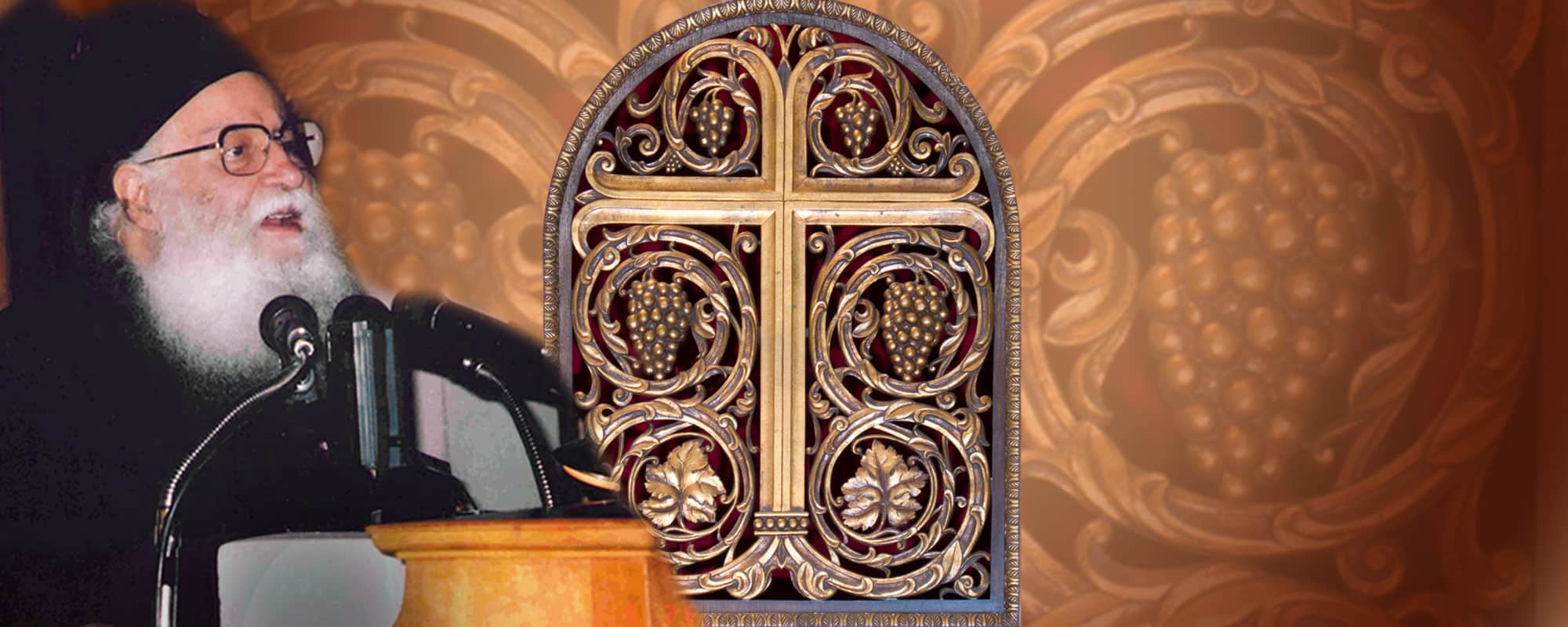
Homily on the Cross
Fr. Athanasios Mitilinaios of blessed memory (+2006) delivered the following homily at the Holy Monastery of Komninios Stomiou in Larissa, Greece, on September 10, 2000, on the Sunday before the Elevation of the Precious Cross and interprets Galatians 6:11-18. The homily was delivered in a free manner and recorded live. Most of the scriptural quotations are not direct quotations. The following translation was made from a transcription by Ms. Eleni Linardaki and Mr. Athanasios K. | Father Athanasios was the abbot of the Monastery of Komnenion in Larissa, Greece.

Homily of Blessed Elder Athanasios Mitilinaios

“THE CROSS OF CHRIST, OUR ETERNAL GLORY”

fr athanasios mitilinaios
Blessed Fr. Athanasios Mitilinaios

On September 14, my beloved, our Church celebrates the Universal elevation of the Precious Cross. On this day we remember the finding of the Precious Cross by Emperor Saint Constantine’s mother, Saint Helen, and its elevation high up from the pulpit by the then Patriarch of Jerusalem, Makarios, around 325.

In order to glorify and honor the Cross, our Church thought to make the feast of the Precious Cross an echo of Great Lent and Good Friday. She even placed the Feast of the Transfiguration 40 days before the Exaltation – 40 days – and it creates an echo of Great Lent.

In the New Testament it is written that the Transfiguration took place shortly before the Passion, that is, a few days before the 15th of the month of Nissan (about the middle of February or March). Moreover, the Church also appointed the two Sundays, the one preceding and the one following the feast, to contain hymnology and biblical readings related to the Precious Cross. Thus, these two Sundays stand as pillars of honor and they accompany the Great Feast.

If you ask, “Why all of this?” The answer is, all the theology of God’s love for man culminates in the sacrifice of Christ on the Cross. We hear from the Evangelist John:

“God so loved the world that He gave His only-begotten Son, that whoever believes in Him will not perish but will have eternal life.” (John 3:16) (Here “so” [οὕτω] in “God so loved the world”, means “immeasurably”)

Moreover, the Cross of Christ is the center of the Gospel. The Holy Cross is also at the center of spiritual life – the center, I emphasize and repeat – of the spiritual life. If you do not place the Precious Cross at the center of your life, then it is impossible both to understand, and much more, to experience spiritual life.

The things we consider spiritual life, allow me to say, are mud. They do not really constitute the spiritual life. Because, simply, many times the entire meaning of the Cross is missing.

If the Cross or the preaching of the Cross is taken away, then we have no salvation. This is why the Apostle Paul in his first letter to the Corinthians writes:

“The word of the Cross is foolishness to those who are perishing.” (1 Cor 1:18) (“word” here means preaching)

Those who ultimately remain unrepentant will, of course, be lost; they will not be saved. For them, the Precious Cross is foolishness. They say: “How is it possible for an incarnate God to be crucified?” And, of course, for the Jews, he says, it was a scandal (1 Cor 1:23): “For if He is Yahweh (the LORD, that is), The Lord of Glory, The Holy One of Israel (as the prophet Isaiah saw Him sitting on an elevated throne, Is. 6:1) how is it possible for Him to ever end up on the Cross? He is not a curse.” (Deut 21:23) This is a scandal to the Jews, which prevents them from returning to Christ.

“…but to us who are being saved it is the power of God.” (1 Cor 1:18)

Αnd certainly it is an expression of the love of God, the Father and the Son and the Holy Spirit, of the Holy Triune God, that is.

Through the Cross, my beloved, we re-enter Paradise that we had lost; it is the symbol of the world’s denial, because the world crucified Christ. Therefore, if we welcome the Cross, we essentially live in rejection of the world.

The Precious Cross is also the symbol of asceticism. Does not the Apostle say to the Philippians that for some Christians, their God is their belly (Phil. 3:19)? He is saying, “their God is, ‘what will we eat, what we will drink’ and what will we wear’” (Mt 6:31), and he calls them enemies of the Cross of Christ (Phil. 3:18). Why? Simply because they have rejected asceticism and, consequently, the Holy Cross.

Moreover, the Precious Cross of Christ is the Tree of Life. Notice, it says in Scripture, “God planted two trees in Paradise, the one tree was the knowledge of good and evil and the other tree was of life.” (Gen. 2:9) (Paradise, I remind you, was upon the Earth. The word “Paradise” is Persian and means “big garden” and it was between two rivers, the Euphrates and the Tigris.)

And He said to the first-formed man: “You are not to try the fruit from the tree of knowledge” (Gen 2:17). Those who were tricked by the devil tried it, despite God’s warning, “the day you eat it, you will die” (Gen 2:17, 3:3). And God expelled them from Paradise. Paradise was a particular place; the rest of our planet was called Earth. This place was called Paradise. It was a symbol of the Kingdom of God. (Today we can go there, it is today’s Iraq, if you will.) Paradise was a symbol. The one tree which deceived them, from which they ate fruit, led them to death.

The love of God expelled them so that they would not go near the tree of life, for then, evil would become, as the Holy Fathers say, immortal. Thus, He reserved the fruit of the Tree of Life for later.

And what is the Tree of Life? It is Jesus Christ, my beloved. Or, if you will, it is the Cross. And just as fruit hung on the tree of life in Paradise, here Christ hangs on the Cross. Therefore, if we do not eat the fruit of the Tree of Life and do not have this as a rule, we sin. It is the opposite of what it was then. So then, what is the fruit? The Body and Blood of Christ, and with It we have life, eternal life.

You see, therefore, how all of these things prefigured, how they prepared man beforehand, for the coming of the Son of God, His Incarnation into this world. Now, therefore, in order to live, we must eat the Fruit of the Tree of Life (the Precious Cross), His Body and His Blood.

Having a knowledge about the Holy Cross, what we have said thus far, reveals to us the magnitude of the love of God and it is the key to our re-entry into the Kingdom of God.

This is how we turn back to the Kingdom of God. But the Kingdom of God is far better and far happier than the ancient Paradise. In other words, it is the kingdom of immortality and incorruption.

The Apostle Paul said the following to the Galatians: “Far be it for me to boast in anything except the Cross of our Lord Jesus Christ, by which the world has been crucified to me, and I to the world” (Gal. 6:14). Here “the world” means the worldly thinking, that which strikes at the Philippians, whom I told you previously, “their god is their belly” (Phil. 3:19). The mind of the flesh, to think in worldly ways, this has died for me, Paul. I too have died for the world.

This is very important indeed. It shows us the way, how to live the exact same way. So, the boast of Paul, and indeed Paul’s only boast, is the Cross of Christ – the crucified Christ! For we are often embarassed to say that we worship a crucified God.

Saint Cyril of Jerusalem, in his Catechisms, refers to the Holy Cross, specifically in his 13th Catechism. We will read a small selection of quotations on what he says about the Precious Cross. Pay attention. He writes:

“The boast of the catholic Church, the boast of boasts of all the works Jesus is the Cross; the Church regards every work of Jesus as boastworthy, but the boast of boasts is the Cross.”

St. Cyril explains further:

“And do not marvel if the whole universe was redeemed; for it was not a bared man, but the only-begotten Son of God who died on its behalf.”

To put it simply, He who was crucified was not a mere man, a mere naked man. But what was He? The Son of God, who incarnated, the only-begotten, who died for us all.”

St. Cyril also writes:

“Let us not then be ashamed of the Cross of our Savior, but rather glory in it.”

Look how things have changed. Look how the devil has succeeded in making us make our Cross secretly, so that others will not see us and say that we are Christians. Are you not Baptized? Are you not a Christian? Why do you hide this, your status?

And as I have related to you many times, when they pass by somewhere, a church for example, they make their cross under their jacket. My beloved, if someone invites you to dinner where some believe and others do not, you make your cross and then begin to eat. Do you go out to eat? Do you make the sign of the Cross at restaurants? But why not? Because we accept the benefaction, the food, but refuse to make a confession of faith? Is this not inconsistent? What will we do? We will make our cross. And we will also say a prayer, “The Lord’s prayer”, for example, if we go out for lunch.

This is what Saint Cyril says, that we should not be ashamed of the Precious Cross, but we must, through the Precious Cross, confess our faith in Christ. He continues:

“I confess the Cross because I know of the Resurrection; for if He endured crucifixion and had remained as He was, perhaps I would not have confessed it; I might have concealed both it and my Teacher; but now that the Resurrection has followed the Cross, I am not ashamed to declare it, because the Teacher died upon the Cross.”

And since we know He was crucified between two robbers, He might even have been viewed as an arch-robber. Saint Cyril continues:

“Whoever does not believe in the power of the crucifixion, ask the demons.”

This is a very good argument, even if indirect. We should not dwell on this, but in this case, by concession, we can.

“Whoever does not believe the words, believe what he sees.” (Jn 10:38)

Like what? Like what happens with fortune-tellers. When the Demons flee.

It happens all the time. A woman or a man goes to the medium, to the fortune teller’s little table. And there (it’s frightening what happens), let’s say it’s a woman who is a medium (medium means “intermediary”). She says to you right away, “My good lady, take off the cross that you have around your neck.” Why? Because the demons informed her that they would not reveal anything to her unless her client takes off the cross.

Is this not proof? The demons are frightened, they tremble and hit the road before the Cross of Christ. All of this shows that when we go to the Precious Cross, we strike the demons with a bolt of lightning.

It happens at times with the demon-possessed also, as it happened with that demon-possessed man in the Gospel: “What have You to do with us, Jesus, Son of God!” (Mark 1:24)

Do you see how the demons are frightened? Not just then, in the Gospel passage where it is recorded, but also today as I explained to you. Just go to the witch. She’ll tell you to take off your cross or whatever else.

St. Cyril continues:

“Many have been crucified throughout the world,” (it was the Roman mode of executing convicts) “but when they see even the Sign of the Cross of Christ, who was crucified for us, they shudder.”

He is saying, there were other ways the Romans executed prisoners, but none of the demons were frightened by any of them. But just seeing the sign of Christ crucified, the demons flee. They hit the road and flee, only by seeing the Cross, not just Christ.

He continues:

“For those men died for their own sins, but Christ for the sins of others.”

The death on the Cross is not ostensible. This is why the Apostle Paul says, “He died under Pontius Pilate”, truly. And look what he says: “according to the Scriptures.” (1 Tim 13:6, 1 Cor 15:3-4) We took this and have it in the Creed.

In other words, he is saying, The Cross was not a myth, an imagination, and afterwards, neither was the deliverance, for then salvation would also be an imagination. The death was not a myth. Christ truly died on the Cross. Therefore the Passion is true. Christ truly suffered on the Cross. And because the Resurrection is true, for He was also truly crucified, we are not ashamed. He was crucified, and we will not deny it, but will boast about it, and If I reject it now, will I not be reproached by Golgotha which is near me?” (St. Cyril of Jerusalem was bishop of Jerusalem when he wrote this in around 350 A.D. He is saying, “Look there, Golgotha is right next to us!”)

It is an awesome tradition that Jesus died on the Cross. “I am reproached by the wood of the Cross”, the one found by Saint Helen only 25 years prior to St. Cyril’s writing.

“The wood of the Cross reproaches me”, he says, every little piece all over the world. (It was cut into very very small pieces and distributed. Today the largest fragment of the Precious Cross is found on Mount Athos.)

He says,

“Do you wish to know clearly that the Cross is the glory of Jesus? Hear the Lord say it Himself: “The time has come for the Son of Man to be glorified.” (Jn 12:23) He said this to His disciples shortly before He was crucified. Do you see the glory of the Cross? He knows that His glory is the Cross. If, therefore, He considers it a glory that He has done the will of the Father, and by His Cross He saves the world, why should I be ashamed?”

Beloved, the Apostle Paul writes: “It is Christ with whom I am crucified.” (Gal 2:20) And if the glory of Jesus is the Cross, then whoever is crucified with Jesus is glorified also. All the Saints took up their Cross and were glorified. Our glory, therefore, is the Cross of Christ.

These days, as I told you, there are many who, unfortunately, reject the Cross because they reject Christ.

Thus our confession and our boasting about the Cross of Christ began for us many years back, to the era of Paul and the proto-martyrs. The sign of the Cross, made properly, is an expression of this glory and is our boast.

One time a man came here and received communion making a caricature of the sign of Cross.1 Beloved, we will make our cross correctly. Correctly. Did you hear? Correctly. It became a caricature. It has become like this everywhere, hiding that we make our Cross.

So then, we will make the sign of the Cross at any place and time, before the eyes of believers and unbelievers.

Let us then close with the Apostolic reading from Saint Paul:

“But God forbid that I should glory in anything but the Cross of our Lord Jesus Christ, by whom the world is crucified to me, and I to the world.” (Gal 6:14)

Amen.

GLORY BE TO THE HOLY AND TRIUNE GOD

  1. Perhaps Fr. Athanasios means what is known to some as “the bouzouki cross”, a cross made three times with a very rapid circular motion over the breast, where a bouzouki player might strike his instrument with a pick.

Translated, edited, adapted, and added emphases by Anthony Hatzidakis

Sources:

Photo of author

GIVING WITNESS TO THE TRUE CHURCH

Orthodox Christians all over the world have received the unchanging Christian Faith, passed down from the Holy Apostles to their successors, and continue to practice it today in the One Holy Catholic and Apostolic Church – The Orthodox Church.
%%tb-image-alt-text%%

Fellowship is followship!

Follow Me!

Twice a year the Church brings before us the Cross, on Sept. 14, Feast of the Exaltation of the Precious and Life-giving Cross, and on the Third Sunday of Lent. Then as today, Sunday after the Exaltation of the Cross, we hear the same words of the Lord: “Whoever wants to come after Me, let him deny himself and take up his cross and follow Me.” I want to offer a few reflections on this radical call of the Lord, that we may gain a fuller insight of this fundamental Christian calling, and apply it in our lives.

In the first place we notice that the Lord does not compel anyone. He respects our freedom. However, if we choose to be His follower, then we must do what the Lord prescribes: first deny ourselves, second take up our cross, and third follow the Lord. If we want to follow the Lord, self-denial and carrying our cross is not an option. As He also said, “He who does not take up his cross and follow Me is not worthy of Me!” (Mt. 10:38) But what does the Lord mean when He says we must “deny” ourselves? And what is this “cross” we are supposed to take up? And what does “follow” the Lord mean?

Deny yourself

“I count everything as loss because of the surpassing worth of knowing Christ Jesus my Lord.”

— Saint Paul

To deny ourselves means to refrain from satisfying our desires or needs. Some Christians understand fasting as refraining from having any candy, or something like that. The Lord demands from His followers a radical change: “Whoever of you does not renounce all that he has cannot be my disciple” (Lk. 14:33). The Lord wants it all. To the young rich man He said, “Go, sell everything, distribute it to the poor and come and follow Me.” More than the physical parting of our goods the Lord wants our detachment from them. So what does the Lord want from us, Christians: to be destitute, not having anything to provide for our children, rely on God to feed us and to clothe us? What He wants is to be attached to Him, and Him alone, and not to rely on our abilities, our ingenuity, our efforts. So they are not needed? They are needed very much. But while we use our God-given mind and intelligence, we should give glory to God, by living for His glory. God expects us to detach ourselves from earth and attach ourselves to heaven. He wants us to cease being self-centered, loving ourselves only, seeking only our self interest, gratifying our needs, striving exclusively for what is to our advantage, which might hurt others, ignoring our suffering fellow human being. Is there anything more un-Christian than this?

St. John the Evangelist urges us: “Do not love the world or the things of the world. If any one loves the world, love of the Father is not in him. For all that is in the world, the lust of the flesh and the lust of the eyes and the pride of life, is not of the Father but is of the world” (1 John 2:15-16). We are all called to renounce the comforts of the world, the pleasures of the flesh, and our own will. We all need to practice self-denial, live for Christ, live the life of Christ. Listen to the Apostle Paul: “I have been crucified with Christ; it is no longer I who live, but Christ who lives in me; and the life I now live in the flesh I live by faith in the Son of God, who loved me and gave Himself for me” (Gal. 2:20). Here, then, is our motivation, here is the power that propels us to renege ourselves, to lose our very life: the love of Christ.

To love Christ we need to know Him. Once we get to know Him we are attracted by Him, because He can, He alone can satisfy all our needs. Says again the Apostle Paul: “I count everything as loss because of the surpassing worth of knowing Christ Jesus my Lord. For His sake I have suffered the loss of all things, and count them as refuse, in order that I may gain Christ…and may know Him and the power of His resurrection, and may share His sufferings, becoming like Him in His death, that if possible I may attain the resurrection from the dead” (Phil. 3:8.10-11). Elsewhere he writes these astounding words, “Now I rejoice in my sufferings for your sake, and in my flesh I complete what is lacking in Christ’s afflictions for the sake of His body, that is the Church” (Col. 1:24). Yes, if we love Christ, then we want to become sharers of His suffering. We embrace Christ’s Cross, because, as St. Ignatius Brianchaninov says, “Outside of the cross, without the cross, living knowledge of Christ does not exist!” But what is this cross we are supposed to take up?

Take up your Cross

Saint Isaac the Syrian: “The way of God is a daily cross. No one ascends to heaven living a ‘cool’ life [i.e. comfortably, carefree, pleased with himself, without struggle]. And we know where the cool path ends.”

To take up our cross means to crucify “the flesh with its passions and desires” (Gal. 5:24). Our cross is to resist the temptations of life, to struggle to subdue the passions, to avoid immorality, to abstain from criticizing others, to swallow our pride, to strive to be pure, meek, humble, holy and blameless, patient, loving one another—to be Christians (1 Pet. 4:16), to be true followers of Christ. Out of love for what Christ did for us we should be willing to embrace voluntarily what He embraced. This is the distinguishing mark of Christ’s followers: “To this [suffering] you have been called, because Christ also suffered for you, leaving you an example, that you should follow in His steps” (1 Pet. 2:21). This radical call is universal, embraces everyone: “The same experience of suffering is required of your brotherhood throughout the world” (1 Pet. 5:9).

The apostles and their disciples had to suffer persecutions and even death for their faith. But we too have our crosses. All of us do. We’d better. For without cross, without pain, suffering, death there is no resurrection, no glory. Listen to the Apostle Paul: “Far be it from me to glory except in the Cross of our Lord Jesus Christ, by which the world has been crucified to me, and I to the world” (Gal. 6:14). St. Isaac the Syrian has this to say: “The way of God is a daily cross. No one ascends to heaven living a “cool” life (i.e. comfortably, carefree, pleased with himself, without struggle). And we know where the cool path ends” (Works, p. 158). Indeed St. Luke calls the cross “daily” (Lk. 9:23). We need to die daily to sin, to evil, to desires, to selfishness, to passions.

How to follow Christ

Followers of the Lord are those who love Him and obey His commandments.

Who is then a follower of Christ? Who is a Christian? Are you a Christian? Careful! “If you are a Christian,” says St. John Chrysostom, “you don’t have a city on earth. The artisan and builder of our city is God. Though the entire universe be ours, we are strangers and sojourners in it. We are citizens of heaven.”

Let Christ lead you
Christ leads us to the summit of human possibilities, to union with God, to theosis. Let us follow Him with confidence.

True and genuine followers are those who let Christ lead them! You want to get to the top of Mount Everest. You’ve never been there. But you selected an experienced climber. Are you going to argue with him which way to go? Christ leads us to the summit of human possibilities, to union with God, to theosis. Let us follow Him with confidence. Let us take Christ’s yoke and learn from Him. Learn what? To be gentle and lowly in heart (Mt. 11:29). Followers of the Lord are those who follow His example, washing each other’s feet (John 13:13-15). Followers of the Lord are those who love Him and obey His commandments. Do we love the Lord? Do we want to be with Him? Then let us embrace the crosses of our daily lives gladly, knowing they are temporary (1 Pet. 1:6, 5:10), and that a Kingdom awaits us. We do it not reluctantly, not being gloomy about it, but rejoicing. The apostle Peter enjoins us: “Rejoice in so far as you share Christ’s sufferings, that you may also rejoice and be glad when His glory is revealed” (1 Pet. 4:13).

My dear brothers and sisters in Christ: No one forced us to be Christians. We chose to follow the Lord with our free will. But have we fully realized the profound demands exerted on us by such decision? Christ wants us to surrender whatever we hold most precious, our very self, our will, entirely to Him. He calls us to set aside everything we hold dear, our spouse, our children, our possessions, our lifestyle, our goals and aspirations, our plans, and love Him with all our soul, with all our mind, with all our heart, with all our strength, with all our being. When we were baptized we pledged to enlist in Christ’s army. But for most of us someone else made this pledge, because we were infants. As adults, being conscious of the demands of our Faith, can we in honesty say we are followers of Christ? Do we acknowledge Him as our Lord and Master? If we do, let us let Him be our Lord and Master.

Fr. E.H./9-21-08

GIVING WITNESS TO THE TRUE CHURCH

Orthodox Christians all over the world have received the unchanging Christian Faith, passed down from the Holy Apostles to their successors, and continue to practice it today in the One Holy Catholic and Apostolic Church – The Orthodox Church.
%%tb-image-alt-text%%

Q&A — “Why do we venerate the Cross?” and 7 other questions about the Cross

exaltation of the precious and life giving cross
SEPT. 14: Feast of the Exaltation of the Precious and Life-giving Cross. Q&A for young and old alike.

Q. Why do we venerate the Cross?

Because the Cross became the principal instrument of our salvation. We hold the Cross of the Lord in honor, we extol it, we praise it, we wear it, and we make the sign of the Cross over us, because Jesus Christ our Savior was nailed on it, He spilled His precious blood on it and died on it, and thus through His death and resurrection He destroyed death.

Q. Isn’t it morbid to honor an instrument of pain and death?

This instrument of death has become an instrument of salvation, of eternal life, so we love it, we cherish it, and we want to always remember it.

Remember the Alamo!” Why do we remember this defeat? Because Alamo stands for liberty, bravery, valor, freedom. Similarly we remember the Cross on which our Lord Jesus Christ fought against the powers of darkness, of sin, of evil, of the devil, of death. It seemed like a defeat, but it became a great victory with His resurrection from the dead.

Q. Why did Christ die on the Cross?

Christ was lifted up on the Cross and died out of love for us of His own free will in order to save us, to redeem us, to rescue us from suffering, corruption and death.

He surrendered Himself voluntarily to death in order to overcome death and grant us eternal life. He descended to the region of the dead, but He rose victorious and triumphant from the tomb, to live forever, and grant us His life.

Q. Why did Christ die in such a painful way?

Christ had to die to defeat death to which we were subject. But it was not becoming of Him to die a natural death, because death is unnatural for the sinless One. So He had to die of violent death in total freedom. He faced death without fear so that we too may overcome its fear, because “something better” awaits us, and death becomes the doorway and the means to achieve it.

Christ didn’t mind to face the suffering of a death on the Cross. Mothers have great pain when they deliver, but they don’t mind, because joy follows that temporary pain. Christ suffered, but He did it gladly, because He loves us so much, and wants to bring us to a new life with Him. He would sacrifice Himself, and He does sacrifice Himself, perennially on the altars of our churches for our salvation.

Q. Why do we pride in the Cross?

Because the Cross is our symbol of victory. The Cross is our power. The Cross stands for life. Cross means love. Christ is the Victor, the Champion, the Winner. He obtained a great victory over death for us. Now the victory is ours.

Q. How is the victory of the Cross ours?

Let’s illustrate it. At the Beijing, China Olympic Games, the American athletes won many metals. One athlete alone won eight gold metals—Michael Phelps. He set an all time record for most gold medals won in a single Olympics. He also set seven new world records and one Olympics record. A spectacular and amazing performance. He made us all very proud. Why? We didn’t win anything, did we? Did you, or you win anything? No. But in him, in this American athlete, all Americans won. His victory became our victory.

Similarly with Christ. The eternal Son of God wanted to make us sharers of His life, His glory, His joy. But we chose, and many of us continue to choose, a life away from Him, which is death. But because He loves us He became man, a human being like us. Being God in the flesh He put death itself to death and obtained for us a great victory on the Cross. It was His victory, but He obtained it not for Himself (because He is Life and the Life-giver, and Life cannot die), but for us. So now we celebrate because the entire human race won in Him, just like America and all its citizens celebrate Phelps’ victory as their own.

Q. So what do we have to do now?

We need to join Jesus Christ our Lord, and make His victory truly ours. How? By believing in Him, by being baptized in Him, and by living in Him. Now we need to strengthen our faith and to live His life, a life of purity, of virtue, of obedience, of sacrifice, of love for God and for each other.

The greatest virtue for children is obedience. Obedience is not a dirty word. Christ, the Son of God, obeyed His Father and sacrificed Himself for us, not reluctantly, but gladly, because He loves us.

The Cross will help us in this struggle, because it is not only our prize and our trophy, but also our help and our weapon to fight evil.

Q. What is our prayer, as we venerate the Cross of the Lord?

  • To thank the Lord Who died on the Cross out of love for us.
  • To make a commitment to live in faith and obedience to Him.
  • To ask for strength and courage to be true followers of the Lord.

The Apolytikion, or anthem of the Feast of the Exaltation of the Cross:

Save, O Master, Your pious people,
and bestow Your blessings on Your inheritance;
grant to the faithful Christians
against the enemy victories;
and protect Your Nation
of The True Believers by Your precious Cross.

Item added to cart.
0 items - 0,00 $